
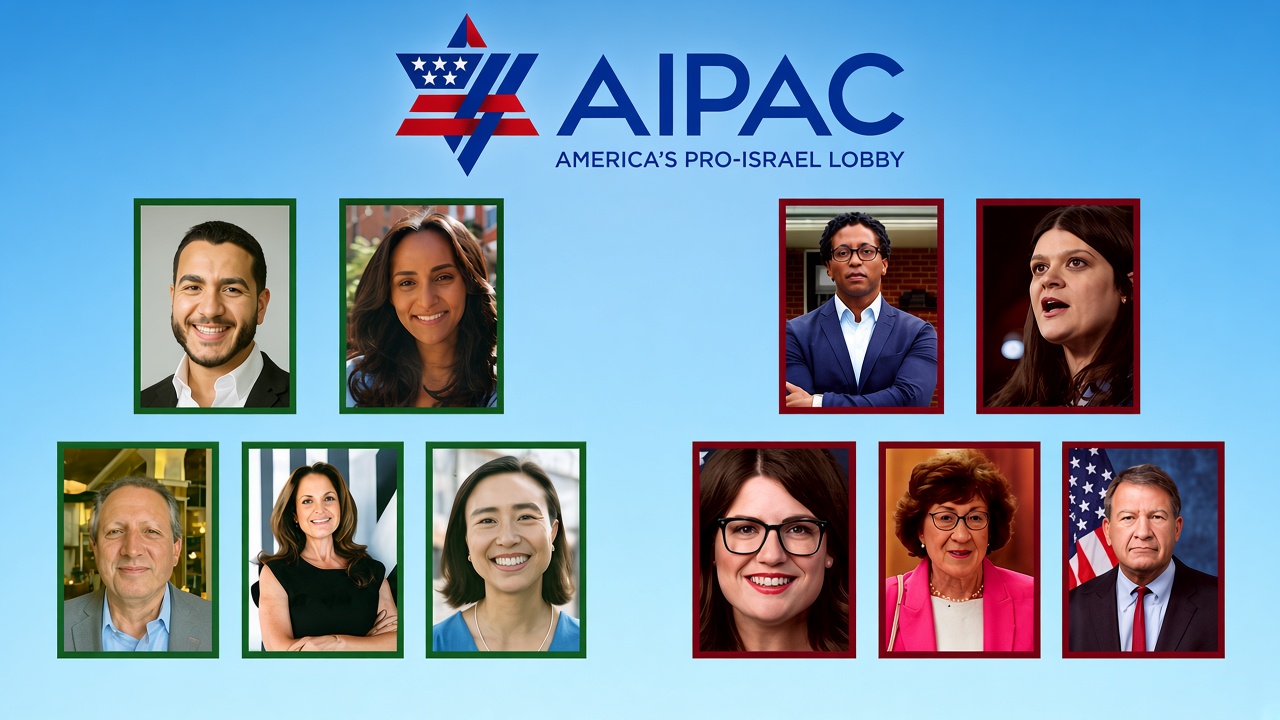
Pro-Israel political action committees and related groups directed roughly $78.1 million in contributions during the 2023-2024 US election cycle, according to Federal Election Commission data compiled by OpenSecrets. The American Israel Public Affairs Committee (AIPAC) accounted for the largest share, reporting about $43.5 million.
AIPAC’s affiliated super PAC, United Democracy Project, added tens of millions more in independent expenditures, primarily on advertising. Combined figures for AIPAC-linked activity in the cycle ranged from roughly $95 million to more than $120 million depending on whether operating costs and transfers are included, according to analyses by OpenSecrets, Sludge and other trackers of FEC filings.
Much of the independent spending focused on Democratic primaries. High-profile efforts helped defeat progressive incumbents including Reps. Jamaal Bowman of New York and Cori Bush of Missouri, both of whom had criticized Israel’s military campaign in Gaza. AIPAC-backed challengers prevailed in those races. The group also supported candidates from both major parties who favor continued strong US-Israel security cooperation.
Other pro-Israel groups appeared in the totals. J Street, which describes itself as pro-Israel and supportive of a two-state solution, contributed about $6.7 million, almost entirely to Democrats. The Republican Jewish Coalition and smaller PACs added further sums on the Republican side.
AIPAC and its supporters describe the activity as the exercise of First Amendment rights by American citizens who favor a robust US-Israel alliance. The organization has said its donors are motivated by shared democratic values and strategic interests. Critics, including some progressive lawmakers and foreign-policy analysts, contend that the scale of spending—especially in low-turnout primaries—gives the lobby outsized influence over congressional debate on Middle East policy.
All reported contributions and expenditures are legal under current US campaign-finance law. Donations tracked by OpenSecrets come from US individuals and entities; FEC rules prohibit direct foreign national contributions to federal candidates. Comparable large-scale spending occurs across other industries and interest groups, from healthcare to energy to gun rights.
Spending by pro-Israel groups has risen sharply since the early 2020s. OpenSecrets and contemporaneous reporting indicate the 2024 cycle marked one of the highest levels of activity on record for the sector. Tracking continues for the 2026 midterms, where early figures already show continued significant outlays.
Comments
0 publishedNo comments have been published yet.